
Salami Haywood

Our goose hunting field is called Haywood. Part of a farm owned by our good friends Lawrence & Becky, Haywood was where we cut our teeth on goose hunting.
The blind is situated in the middle of a hedgerow, with rotted out fence posts and cedar branches wrapped up in honeysuckle. The ground inside is covered in spent shotshells that span back decades, and the dirt beneath that is streaked with white from decomposing oyster shells, part of a colonial-era midden. From the blind, you can smell the brackish water of the Potomac River throwing itself along the cliffs that drop abruptly from the field edge. It's a good place to kill geese.
We've spent a lot of time in that blind- warm, bluebird days and icy, windy mornings. Some days with birds locked up while we are setting out decoys, and some days where the birds stay a mile high and never give us a look.
It’s the first place we hunted with our friend Cameron and his father Lawrence. It's a place where we have laughed so hard our sides hurt, and been so cold that we can’t draw a breath. It's a moderately sized field on a peninsula full of similar fields. On a map it doesn't look special or distinct. But it's different to us- it holds meaning and memories that are ours alone.
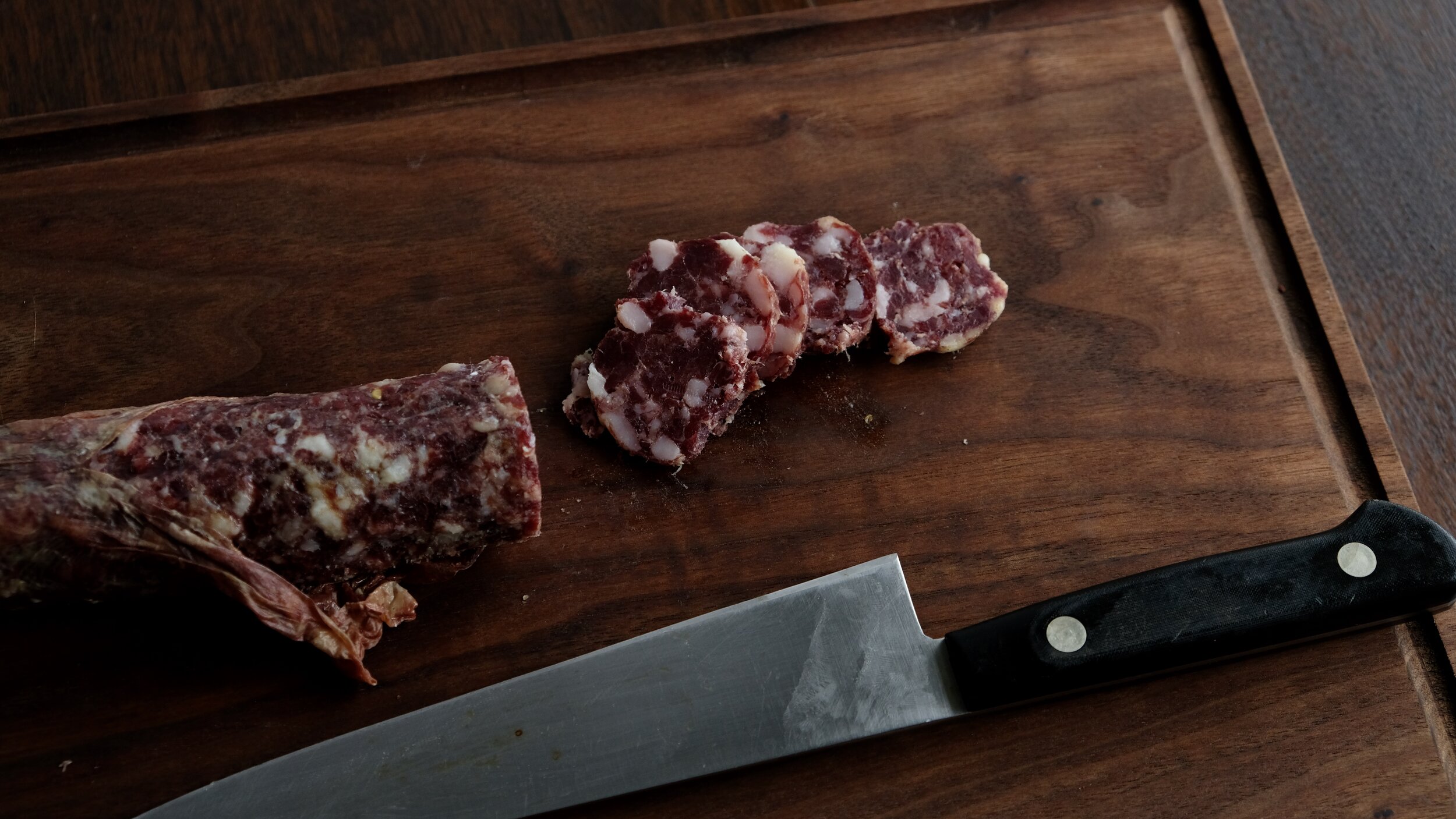
And so, this salami is distinctly ours. We used goose meat, fennel, and garlic from the farm and sugary persimmons we gathered along the field edge. The pecans are grown on the farm as well- we like to munch on them while standing around the wood stove trying to warm up.
This was also our first batch of salami using beef middles instead of pork casing. The middles are wider, thicker, and are more traditional for salami making. They peel easier after curing, and combined with the MOLD600 we had little to no case hardening. If you use pork casing, check the weight loss earlier as they will dry faster.
Salami Haywood
As always, if you’ve never cured sausage before, please check out our primer before you get started- these instructions assume a baseline knowledge of the process. These ingredients are measured by percent weight, not volume, to make them easy to scale to the amount of meat you are working with. Grind the meat you would like to use, weigh it, and then do the math to figure out how much of each of the other ingredients you will need by percentage. Do not substitute or change the ratio of instacure #2 or salt. You may adjust the spices to your liking.
A note on the persimmons- we foraged our persimmons, but store bought will work fine too. Just make sure you get the right kind- you want hachiya, not fuyu, persimmons. The fuyu are delicious on their own, but the hachiya are better suited for cooking and baking applications. Persimmons have a reputation for astringency when not fully ripe- you can avoid this by picking after a frost, or freezing them yourself for a short period of time and then letting them soften on your countertop. This brings out the sugars and decreases the tannins in the fruit.
Prep time: 1 hour
Hang time: 21-40 days

Ingredients:
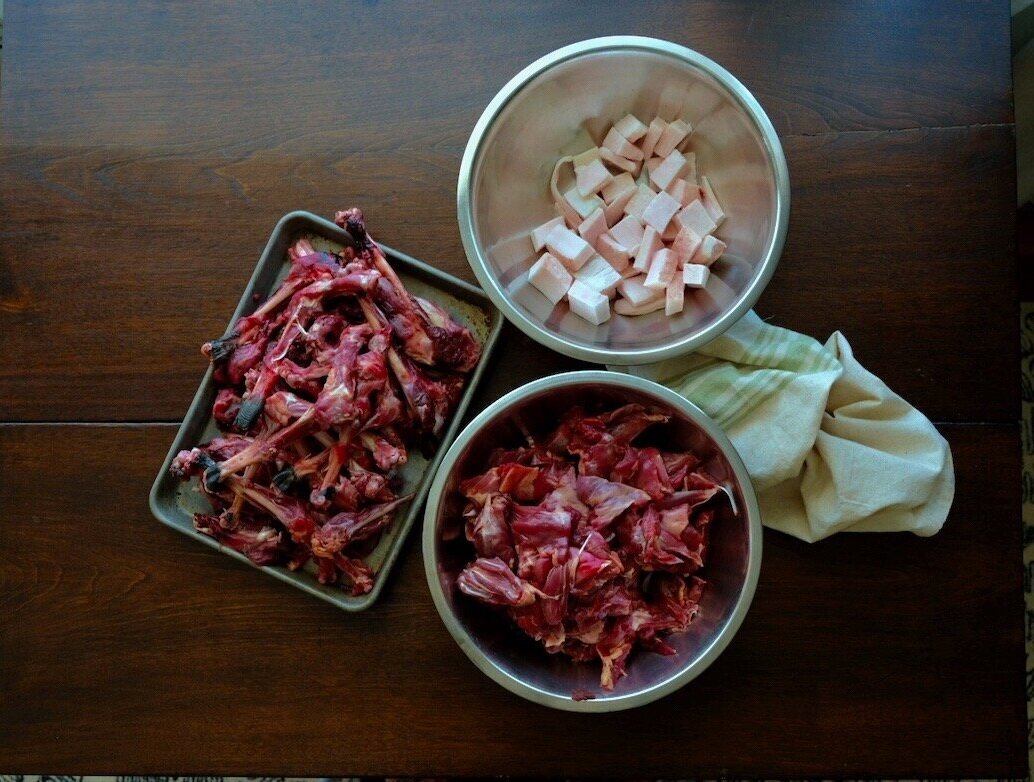
100 % goose thigh/wing meat, deboned, trimmed of sinew, tendons and skin
25% pork fat
1.4% salt
.38% instacure #2
.6% dextrose
.6% fennel seed, toasted, coarsely crushed
.37% black peppercorn, toasted, coarsely crushed
1.8% elephant garlic, minced
6% pecans, shelled, roughly chopped
7% persimmon puree, bletted, seeds removed
** bactoferm f-rm-52


Method:
Combine goose meat, salt, instacure #2, dextrose, fennel, pepper, garlic and pecans. Cover and refrigerate for a few hours or overnight.
Grind fat separately through a medium die, then grind the meat mixture through a fine die.
Using a stand mixer or wooden spoon, mix the fat with the meat mixture and incorporate the persimmon. Add the bactoferm and water mixture. Mix until slightly tacky, about 1-2 minutes.
Stuff into beef middles, tie into 10” links, and prick with a sterile needle or sausage pricker. Weigh and record the starting weight of each set of links. Incubate for ~12-18 hours in a warm room, then hang in the cure chamber for 21-40 days, or until 30-35% weight loss is achieved.

I’ve been tinkering with the recipe for a few seasons now: a classic maple breakfast sausage.

This venison prosciutto is a reminder of a season long past, and how our perspectives and expectations can change. It’s texturally perfect, slicing as nicely as any Italian or Spanish ham I have ever put a knife to.
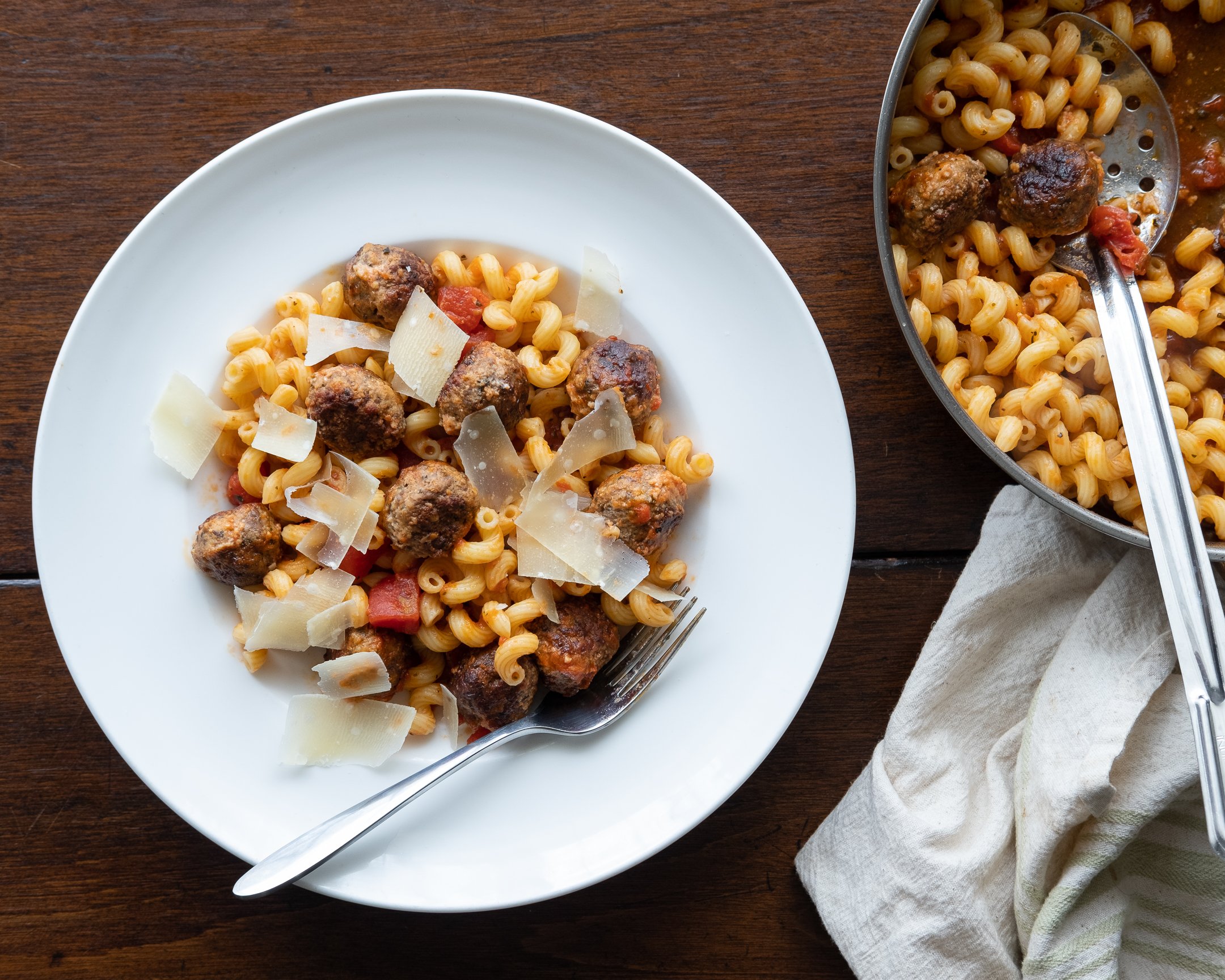
Treating poultry sausages as a separate category, and brining the meat before grinding it, is the key to a juicy, flavorful turkey sausage.

Stuffing sausage into a deboned goose neck is a little bit metal.
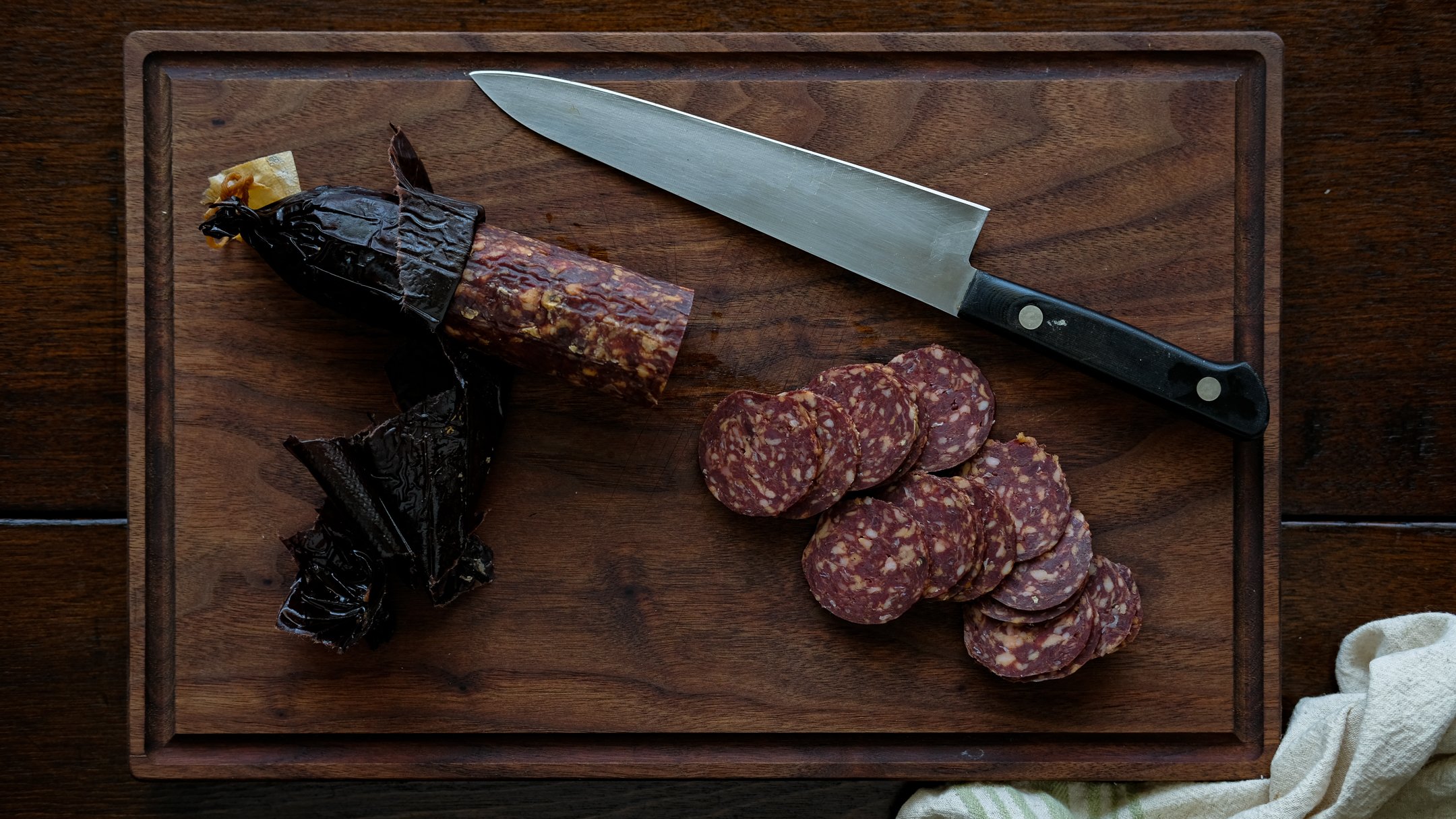
There is nothing like the tang and texture of real summer sausage.
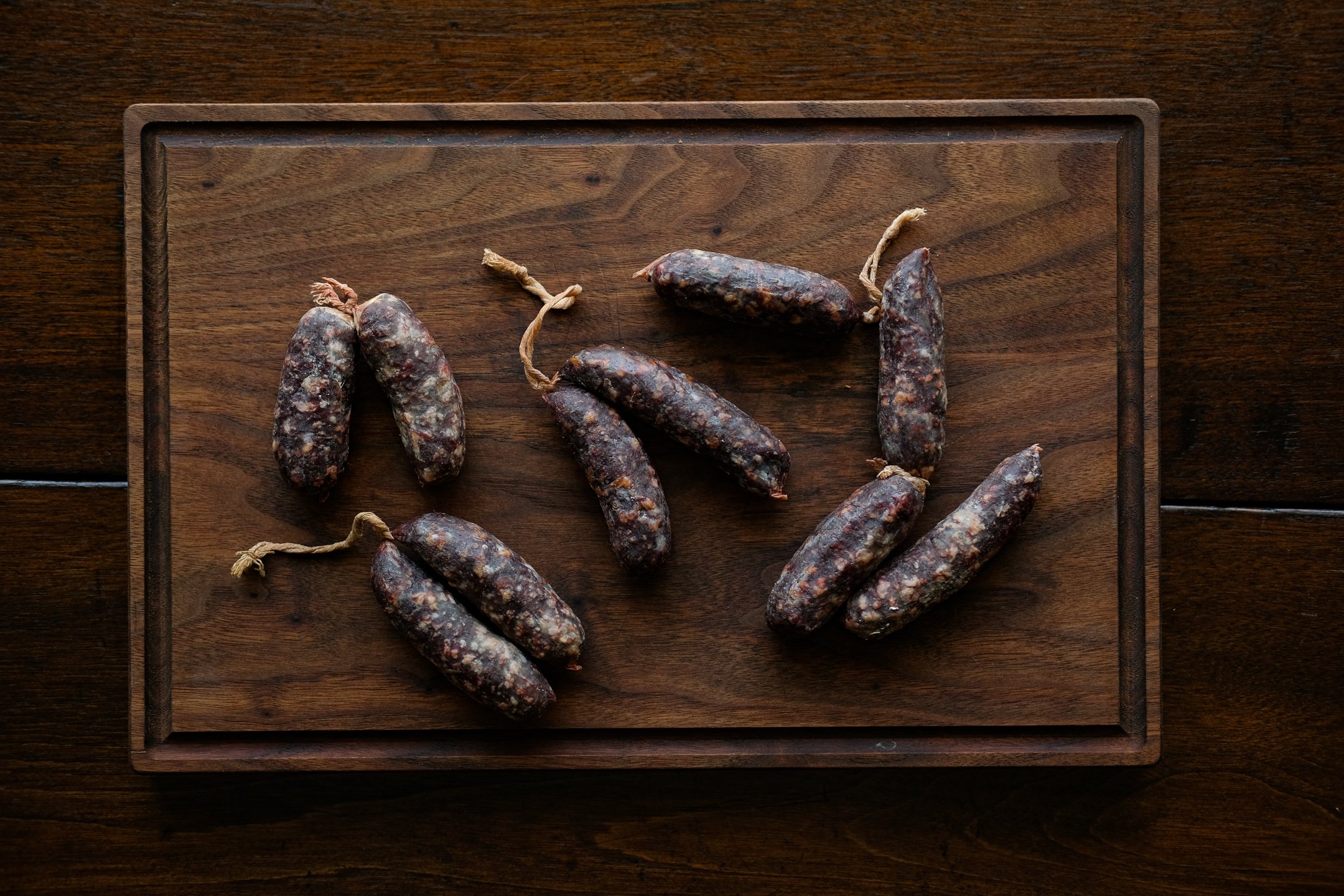
Make a bunch of these- they might be the best protein packed, hiking, hunting, splitting firewood, high output on a cold day, snack ever.

Cutting into this coppa exposed a thing of beauty. It is honestly one of the coolest things I've ever made.
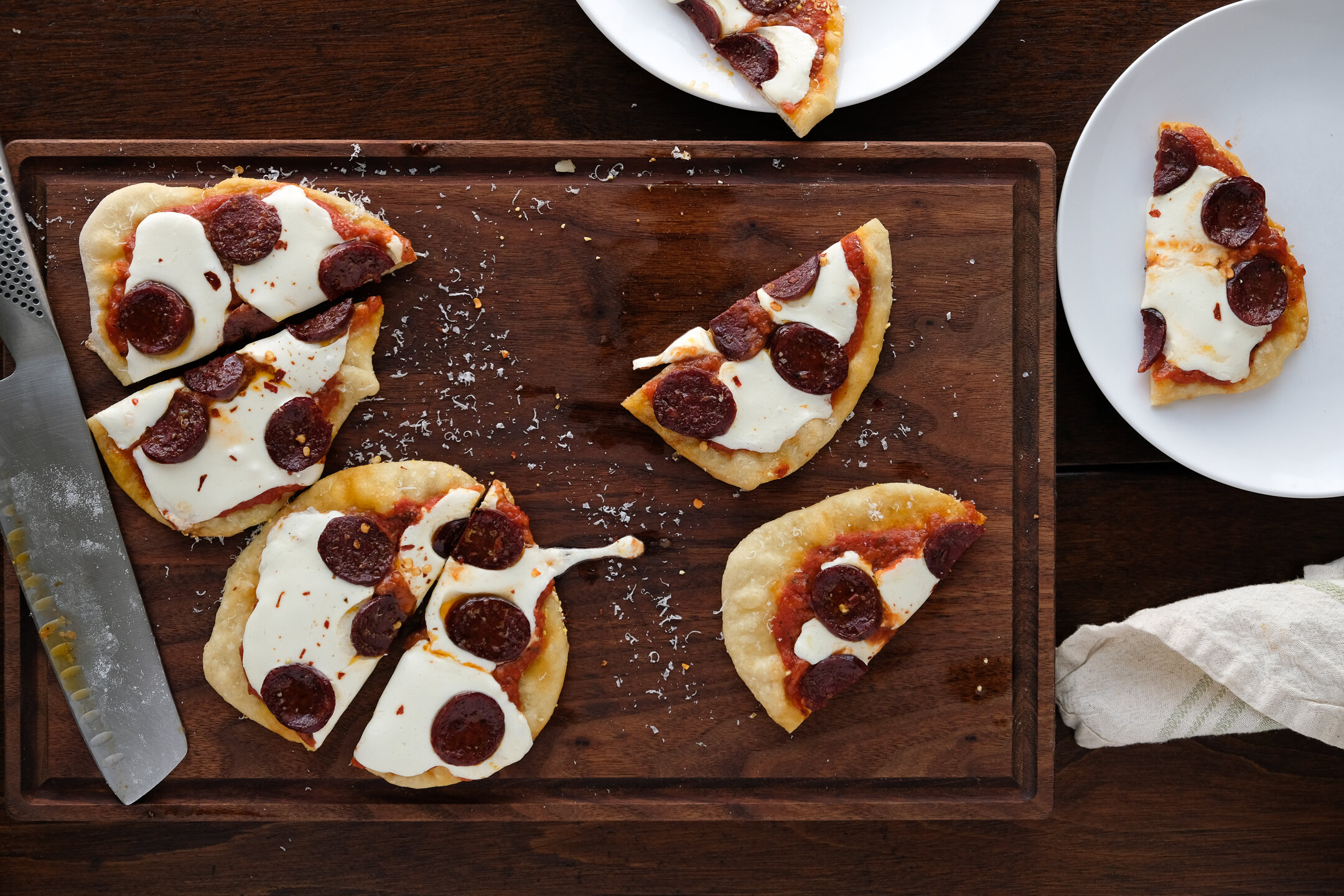
Tangier and smokier than the store bought stuff.
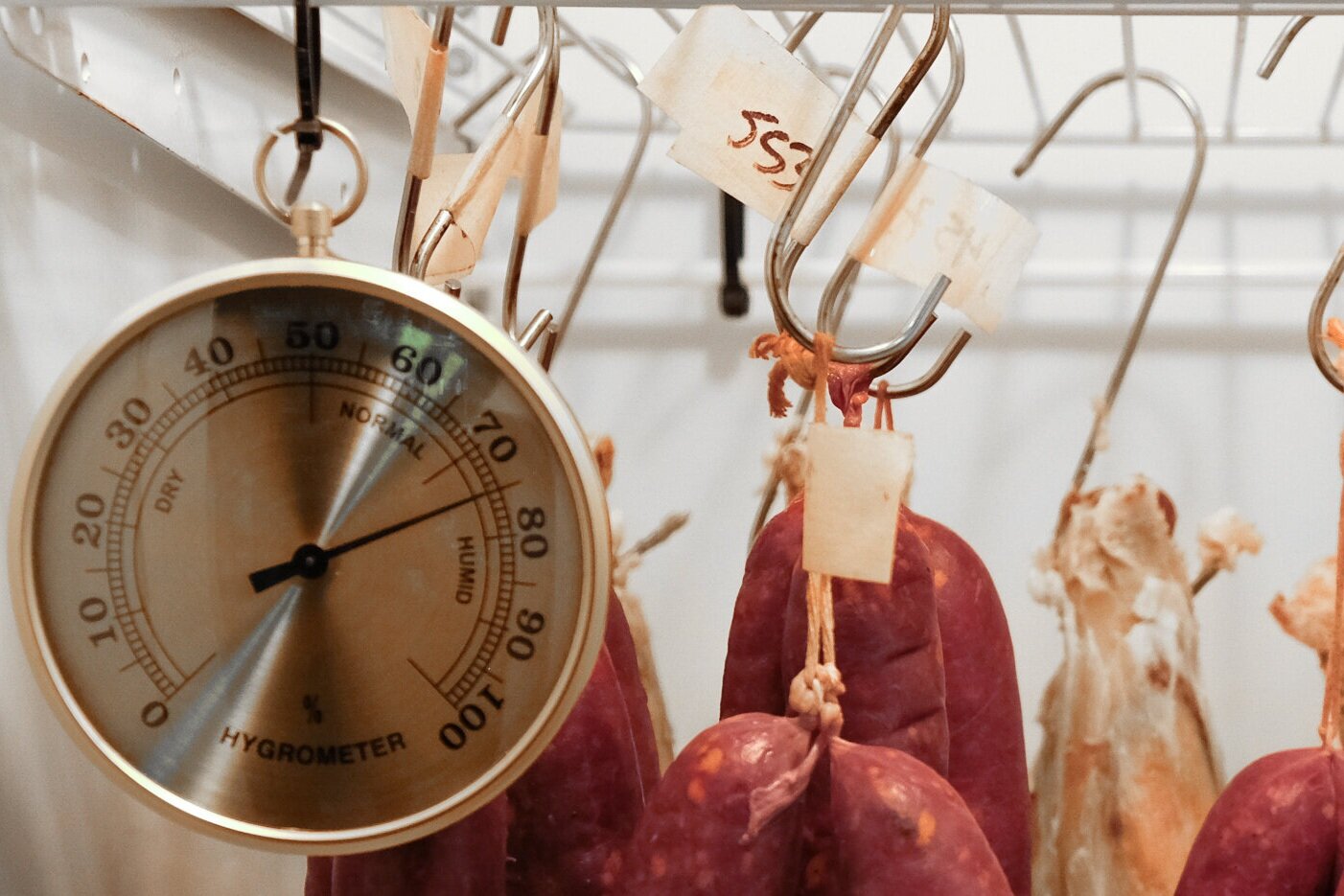
Build your own curing chamber for salami, prosciutto, and more

Birch beaver bacon- it had a nice ring to it.

Not a whole lot of people make smoked, cased, fresh chorizo.

This kielbasa is smoky and garlicky, and tastes great hot or cold.

This sausage was inspired by jagerwurst, a German sausage that translates to “hunter’s sausage”, and an old timey beaver lure recipe that we made this season.

Beaver prosciutto is rich and a little woodsy, almost nutty, with a fine grain and excellent texture.
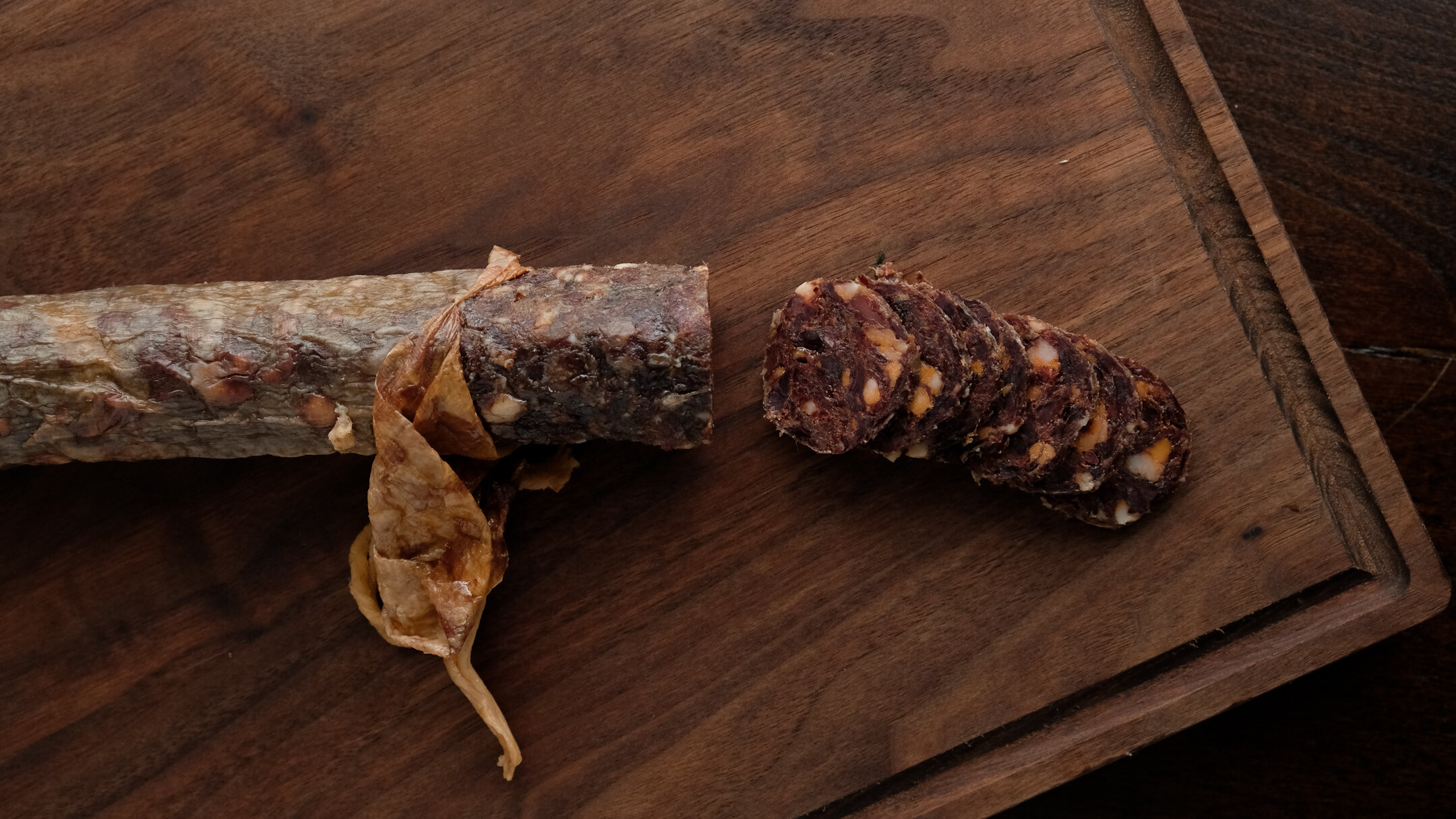
This salami is garlicky and spicy, yet doesn't mask the subtle qualities of the beaver meat.

A good way to make use of your venison liver- incorporate it into a spicy, smoky sausage.
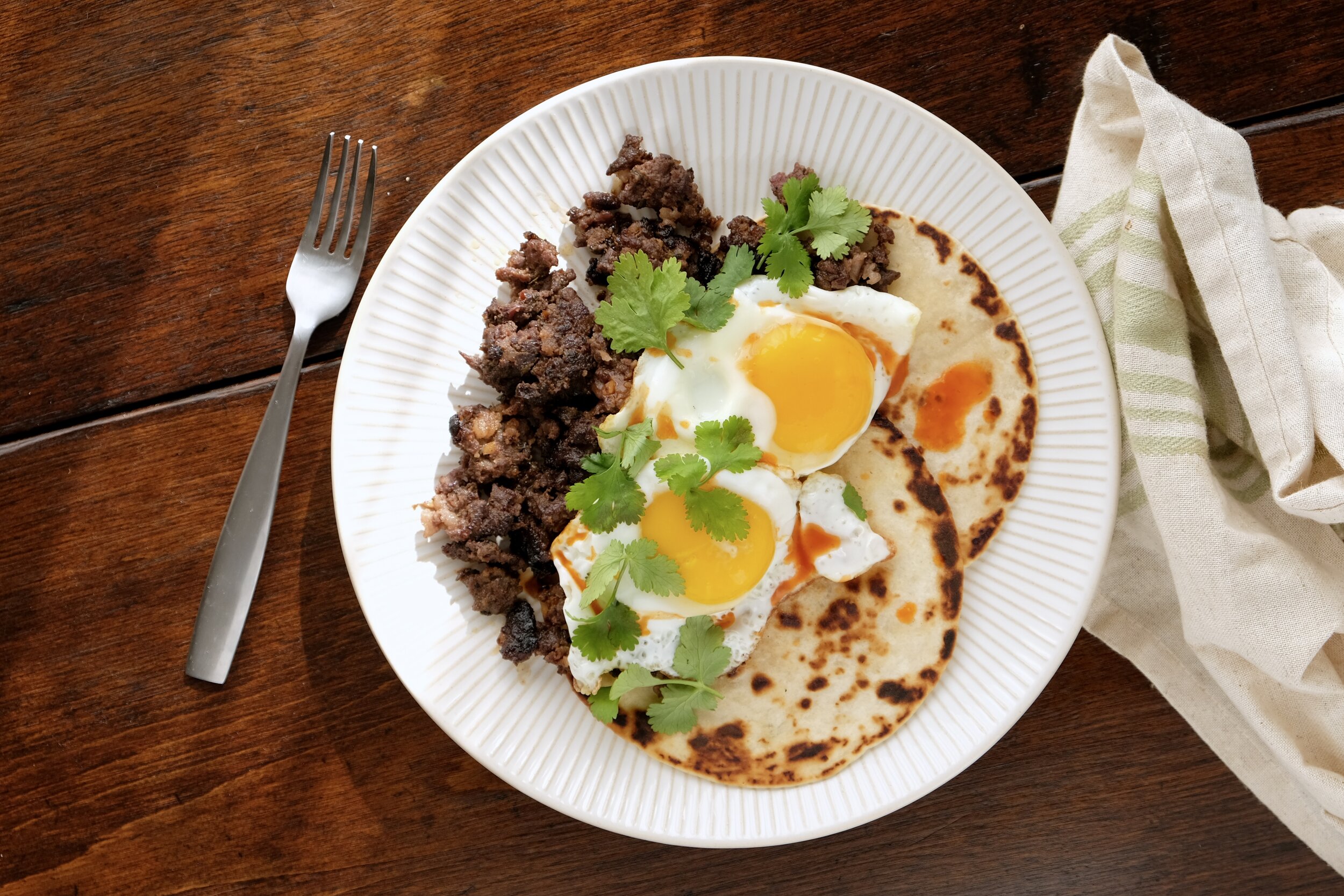
Quick and easy, this versatile venison sausage is a staple in our kitchen.
The marsh ghost has become an obsession of ours.

Pancetta is similar to bacon, but it’s not smoked and has a heavier focus on aromatics. It would be easier to just buy some humanely raised artisan pancetta, but we have venison and pork fat, and it's fun to attempt something that blurs the lines and challenges the senses.
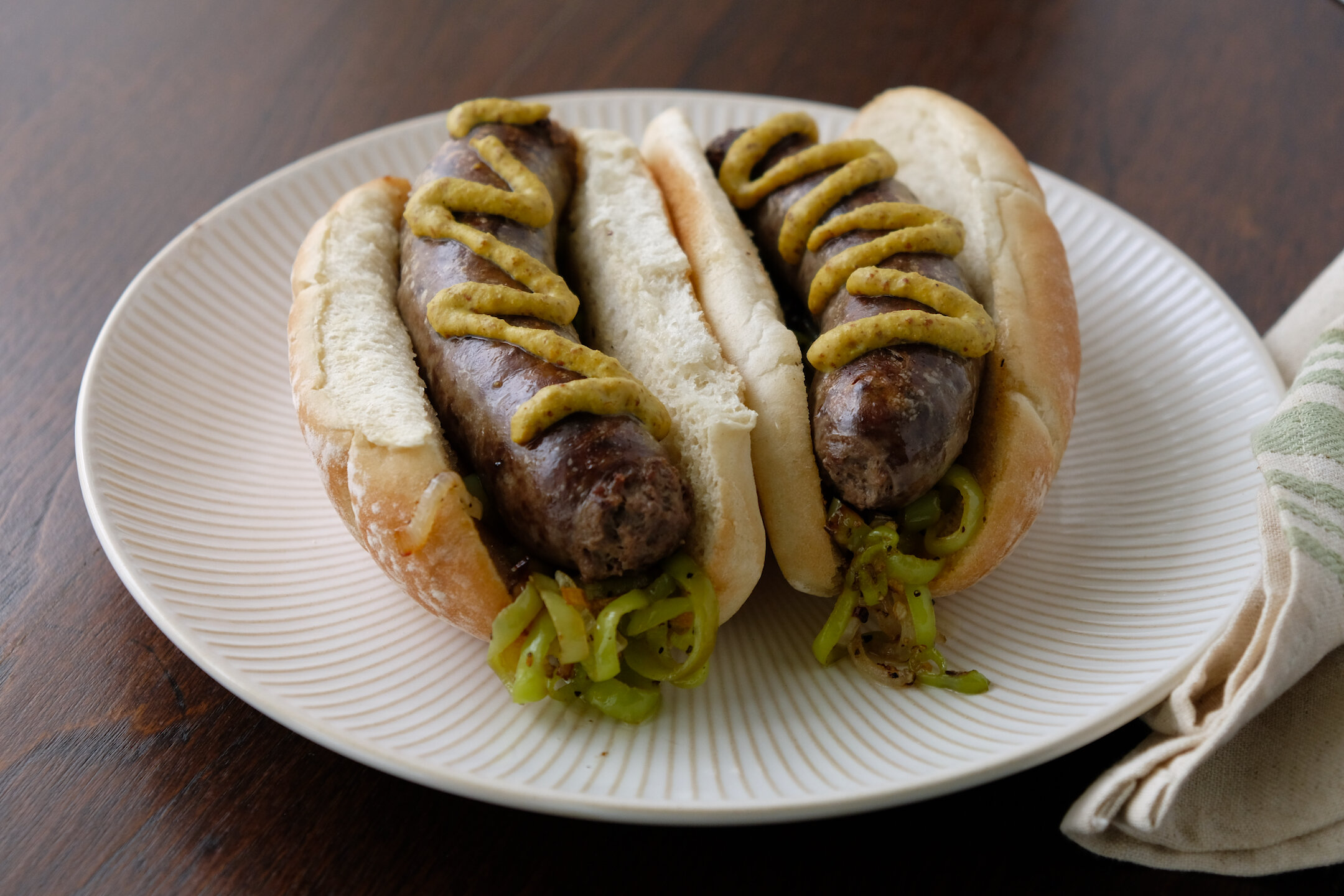
Juicy and flavorful, and just as good piled on a bun with some mustard as they are on a plate heaped with spaetzle and sauerkraut.
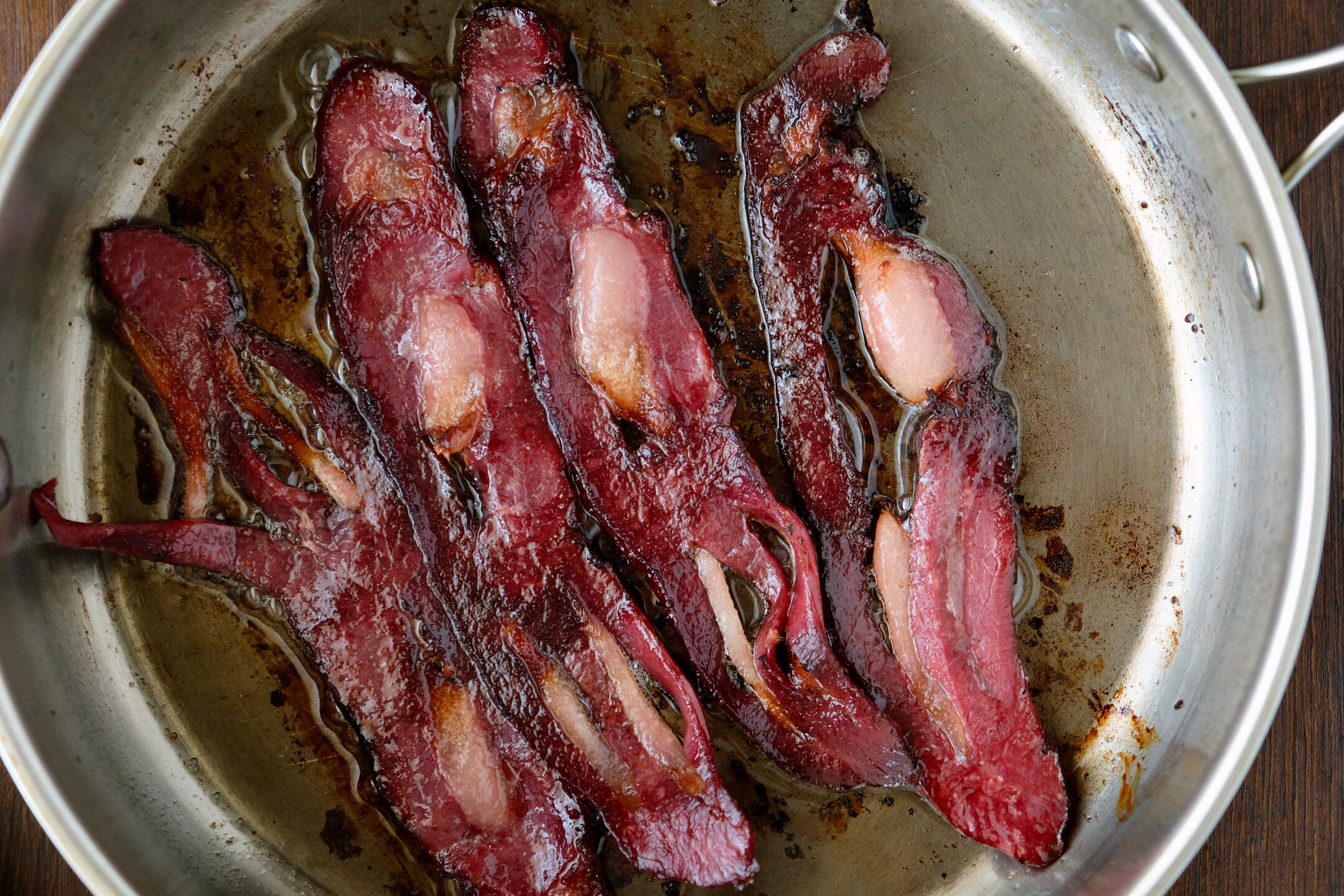
A little bit of smoke & a little bit of chemistry makes our venison bacon as close to the real thing as you can get
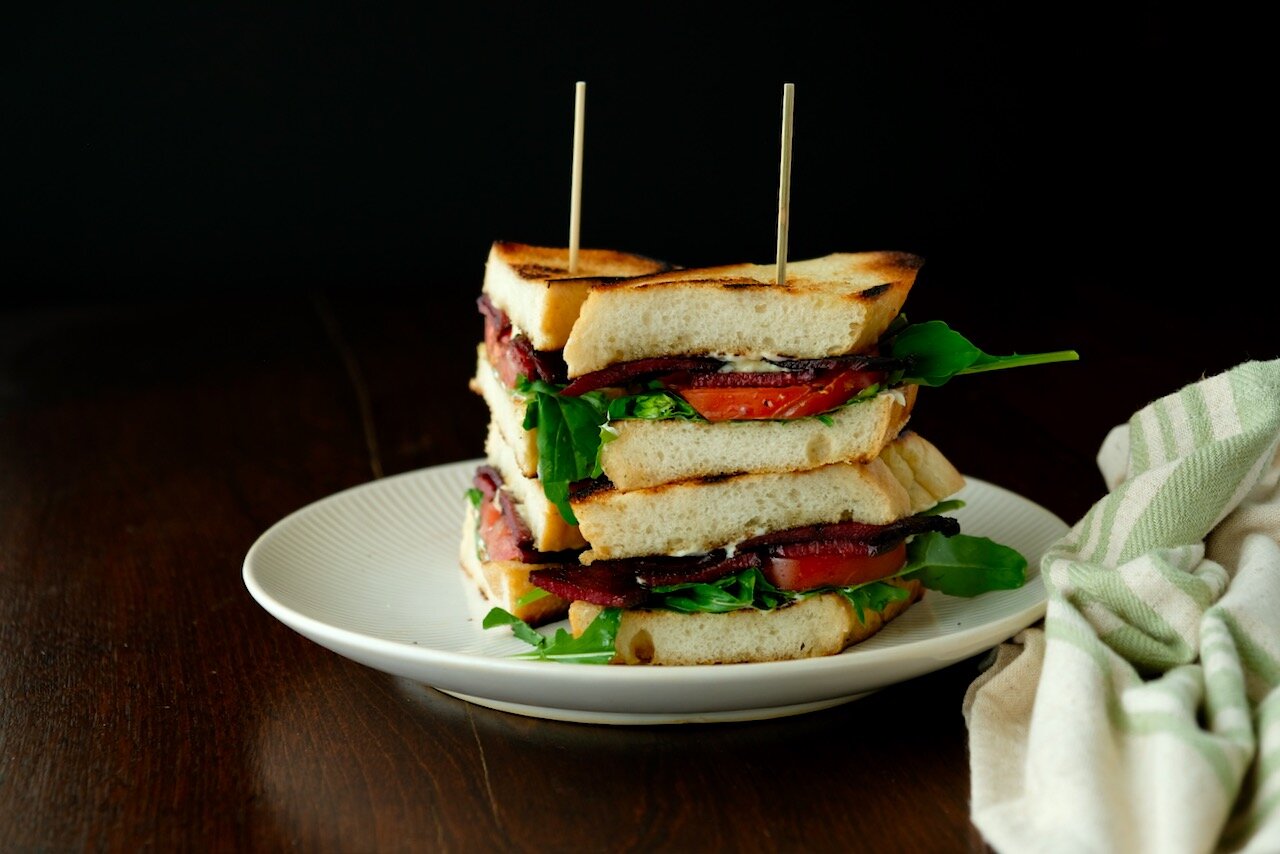
This recipe is an attempt to get that salty, smoky, crispy eating experience out of a protein that is almost the opposite of pork.
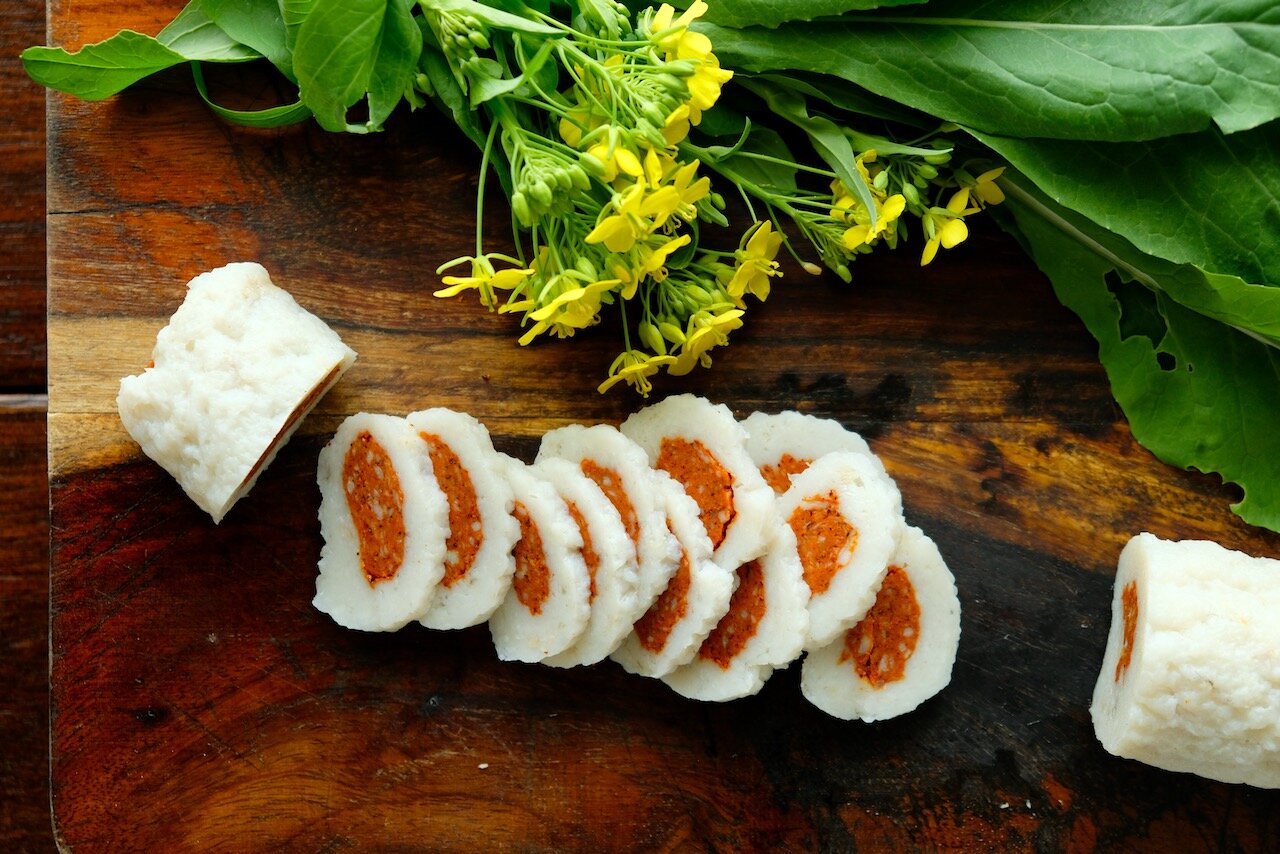
Kamaboko- you might not have heard of it, but I guarantee you’ve tried it. These are as good, if not better, than the kamaboko you can buy in asian grocery stores.
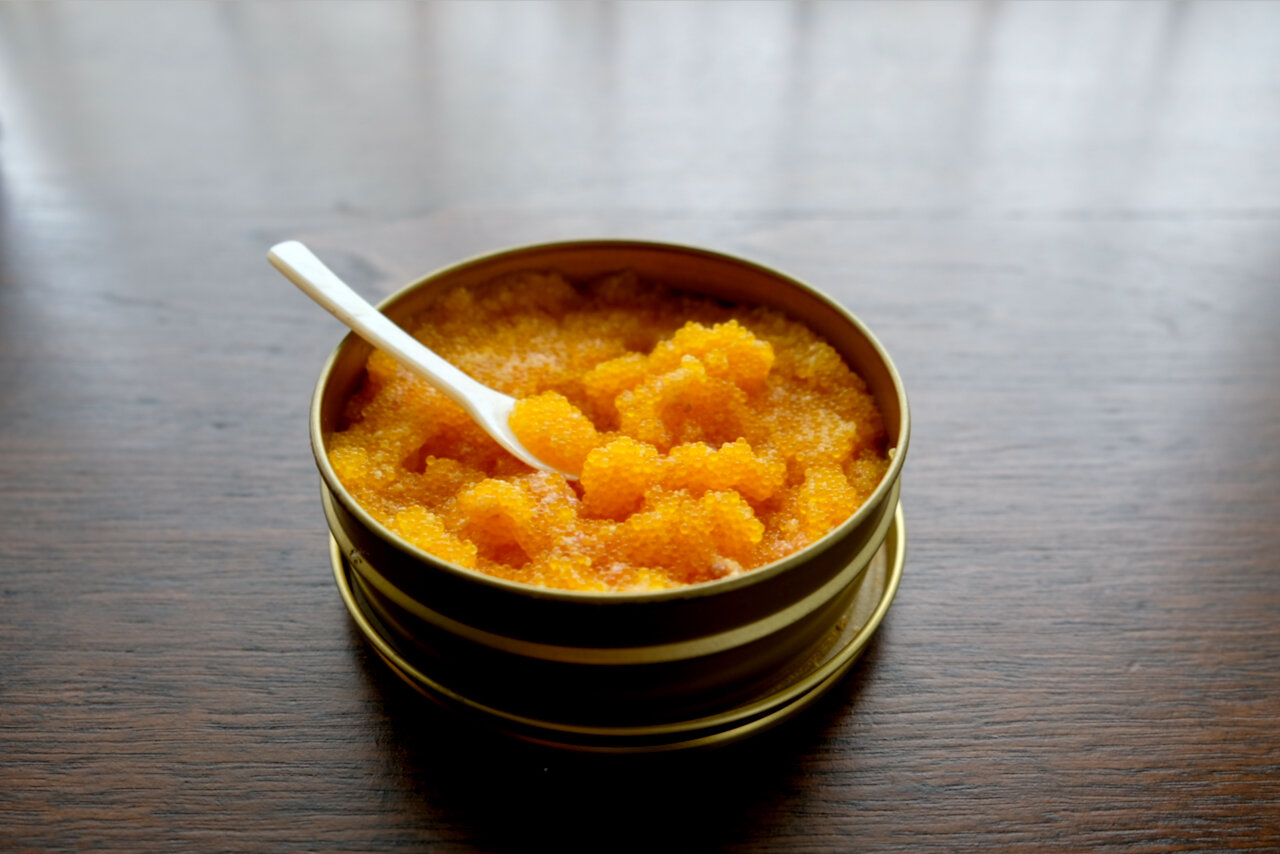
The fine texture, color and richness of snakehead roe is exceptional. Flavor-wise, it is mildly briny and not fishy at all, with an eggy richness that you only find in good fish roe.
This salami is distinctly ours- goose meat, fennel, & garlic from the farm & sugary persimmons we gathered along the field edge
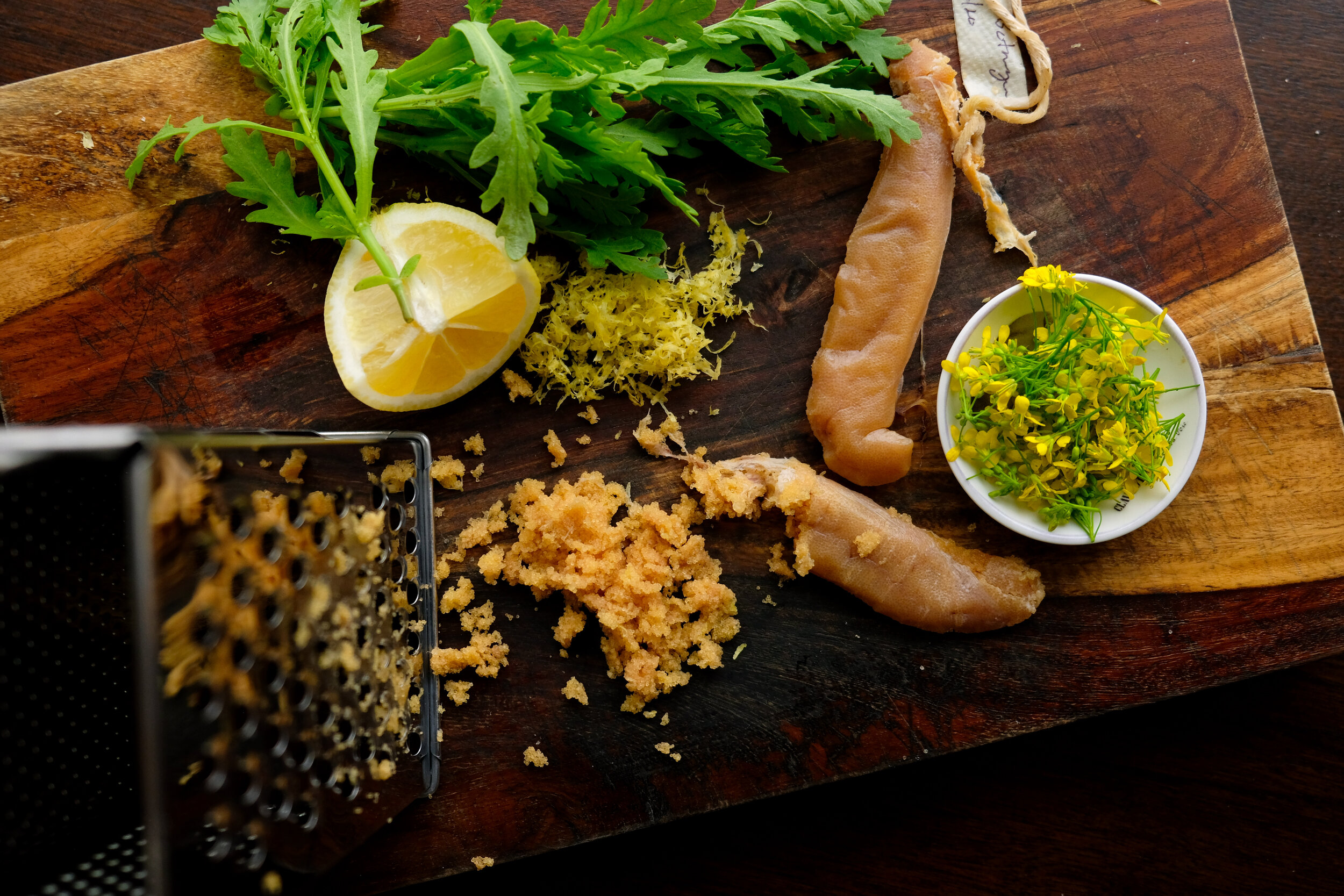
Bottarga, essentially, is a salt cured roe sac. The result is something similar to parmesan cheese, but with an eggy-briny flavor.

Meat, salt, and some spices. This dry cured charcuterie is just about as simple as it gets and really amplifies the flavor of the venison

All the experiences of November at the farm, infused together into a single bite.

Slice it thin and serve over crusty bread, or add to any dish that needs a pop of fattiness.
“Best sausage I’ve ever had”